

Dubai deploys high-tech vehicle to combat flooding and rain emergencies
New machine to cut emergency times by 75 percent
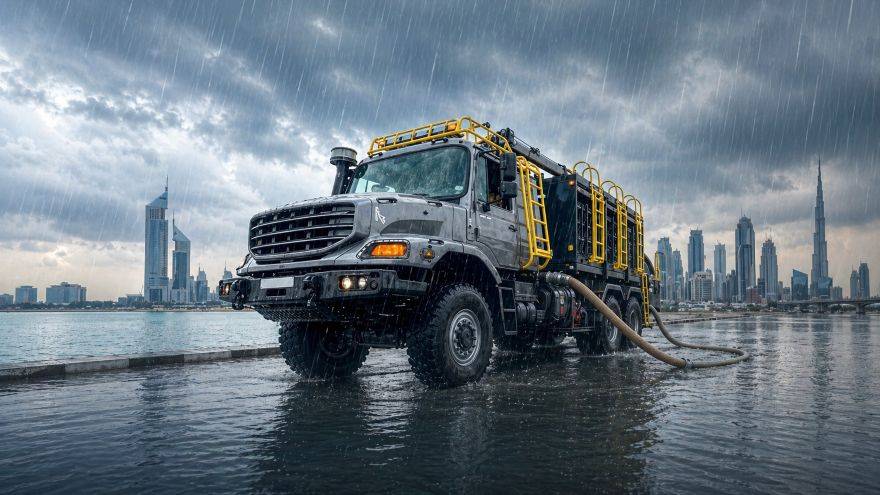
DUBAI – Dubai has introduced a specialised rapid intervention vehicle aimed at strengthening its response to heavy rainfall and flooding, marking a significant upgrade in the city’s emergency management capabilities.
Developed by the Roads and Transport Authority, the system is designed to handle severe water accumulation while maintaining traffic flow and operational continuity across key road networks.
The initiative comes as part of broader efforts to enhance infrastructure resilience in the face of increasingly unpredictable weather patterns. Officials say the vehicle is engineered to respond immediately to water-related emergencies, reducing delays and improving safety during critical situations.
The system was reviewed by His Highness Sheikh Hamdan bin Mohammed bin Rashid Al Maktoum during an inspection of specialised mobility projects, highlighting its strategic importance within Dubai’s wider urban planning and emergency preparedness framework.
Rapid intervention vehicle
At the core of the vehicle’s capability is a powerful pumping system designed for rapid water removal. It is equipped with four pumps delivering a combined capacity of approximately 60,000 litres per minute. This level of performance matches the output of around 10 conventional pumps or 25 water suction tankers, significantly increasing operational efficiency during flooding incidents.
As part of its efforts to develop an integrated and smart mobility system in #Dubai, RTA has launched three key initiatives:
— RTA (@rta_dubai) April 26, 2026
The Rapid Intervention Vehicles to handle emergencies and heavy rainfall, with a pumping capacity of up to 60,000 litres per minute;
the Smart Bus…
The system can pump water at a rate of about 1,000 litres per second, enabling swift clearance of waterlogged roads. It is also capable of operating in water depths of up to 1.8 metres, allowing it to function effectively in some of the most challenging conditions.
Unlike traditional equipment, which often requires time to set up, the vehicle is built for immediate deployment. This capability allows emergency teams to act without delay, reducing the risk of prolonged road closures and traffic disruption.
Advanced systems
The rapid intervention vehicle incorporates an integrated design that combines multiple technologies into a single mobile unit. A main pump is operated from within the vehicle using a hydraulic system, supported by three pump engines and four primary pumping units.
Additional components include rainwater suction hoses and a hose reel trailer, enabling flexible operations across different environments. The inclusion of a rescue boat supports evacuation efforts when required, particularly in heavily flooded areas.
A thermal drone is also part of the system, providing real-time monitoring and on-site assessment. This allows teams to identify problem areas quickly and allocate resources more effectively. A backup generator ensures continuous operation, while a lighting tower enables work to continue in low-light or night-time conditions.
Together, these features create a self-contained response unit capable of handling complex emergency scenarios without relying heavily on external support.
Faster intervention
One of the most significant advantages of the new system is its impact on response times. According to the RTA, the vehicle reduces response times for water-related emergencies by more than 75 percent. This improvement is expected to play a critical role in minimising damage and ensuring public safety during heavy rainfall.
Conventional methods often face limitations in both speed and accessibility. Mobile pumps require prior preparation before deployment, while water suction tankers may struggle to reach areas with deep water accumulation. The new vehicle overcomes these challenges by combining mobility with high-capacity performance.
By enabling faster intervention, the system helps maintain traffic flow across the city, reducing congestion and disruption. It also contributes to protecting infrastructure, private property and public safety during extreme weather events.
Climate readiness
The introduction of the rapid intervention vehicle reflects Dubai’s ongoing focus on climate resilience and future preparedness. With weather patterns becoming more variable, the need for efficient and adaptable emergency response systems has become increasingly critical.
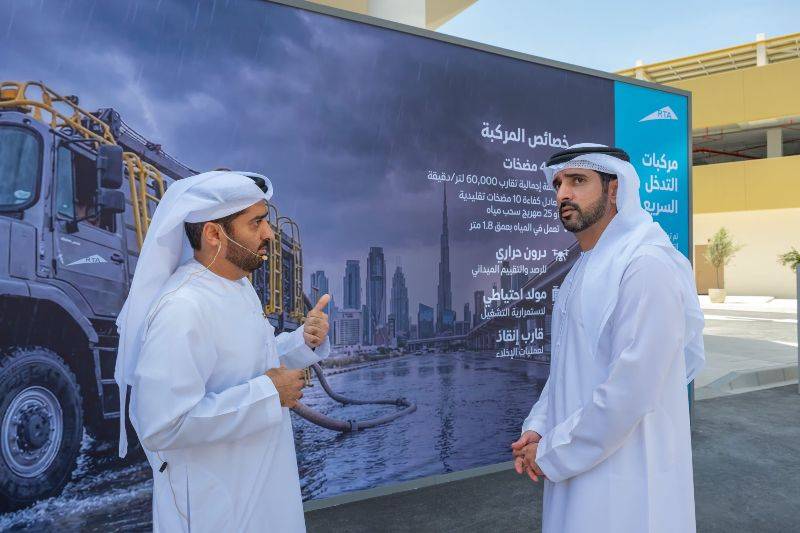
Officials emphasise that the vehicle is part of a wider strategy to strengthen infrastructure and ensure that the city remains operational under all conditions. The integration of advanced technologies into emergency management systems is a key element of this approach.
Mattar Al Tayer said the initiative aligns with efforts to develop specialised solutions that enhance readiness for future challenges. The focus remains on combining innovation with practical application to support sustainable urban development.